A prepared matter
See a matter prepared, start to finish.
Seven fictional documents from a supply dispute, stamped and bound into one exhibit packet by the same code your documents go through. Nothing to install, nothing uploaded.
What you get
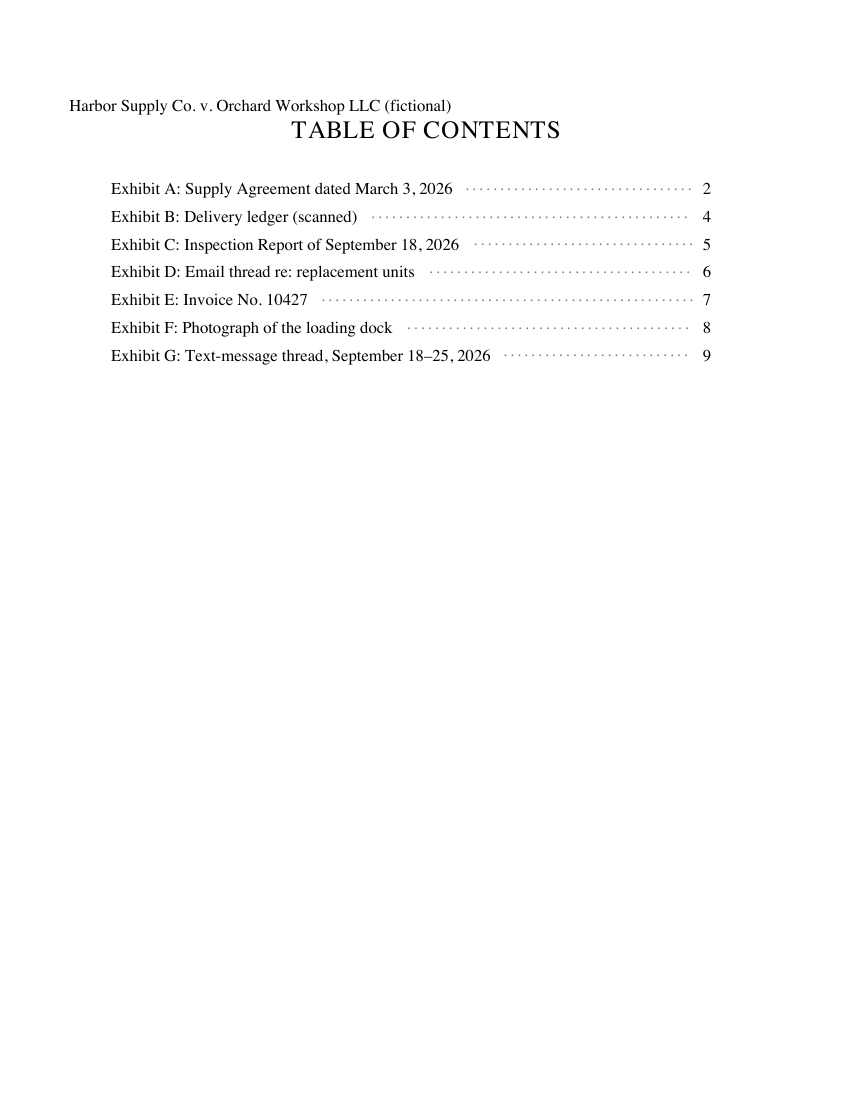
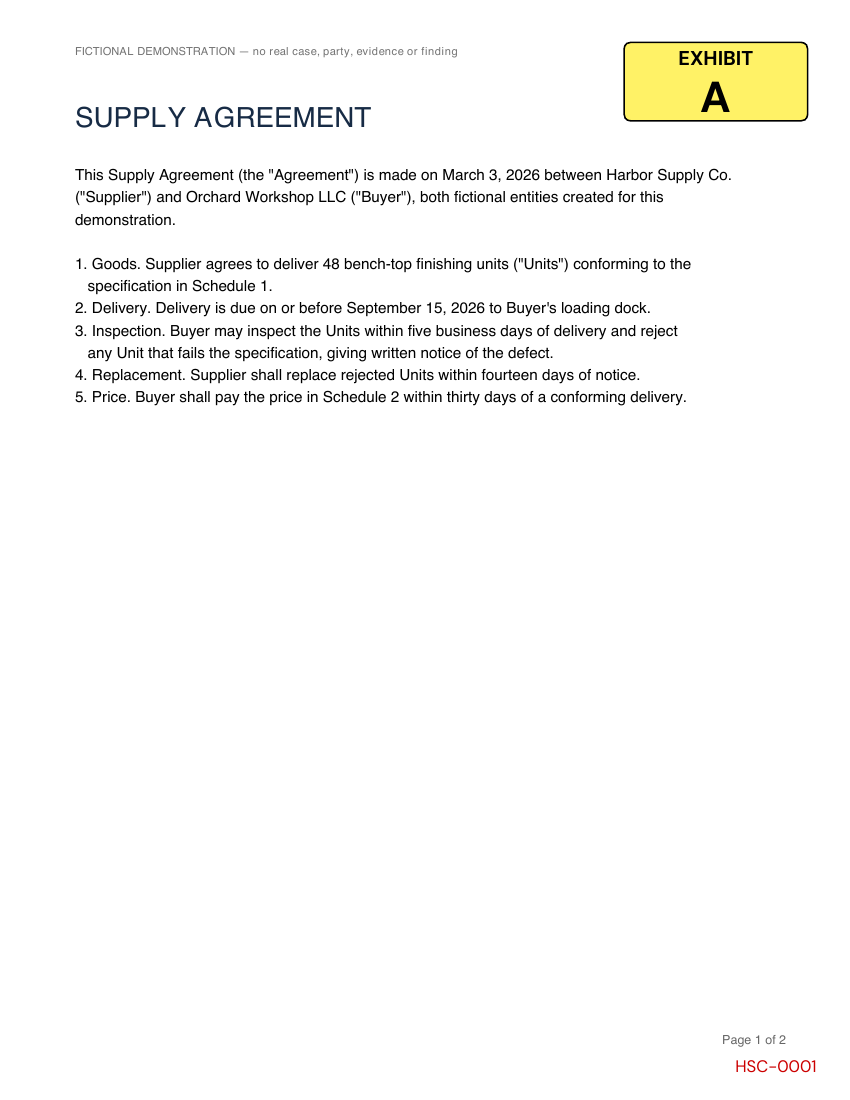
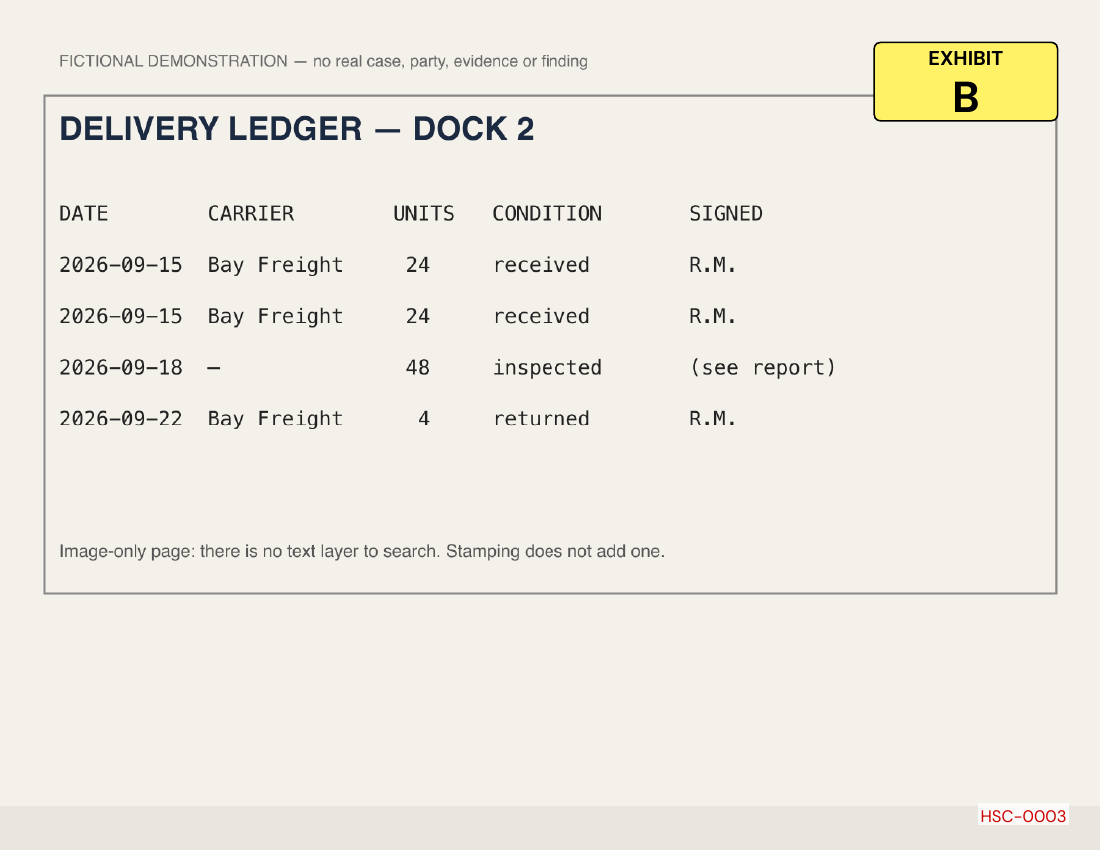
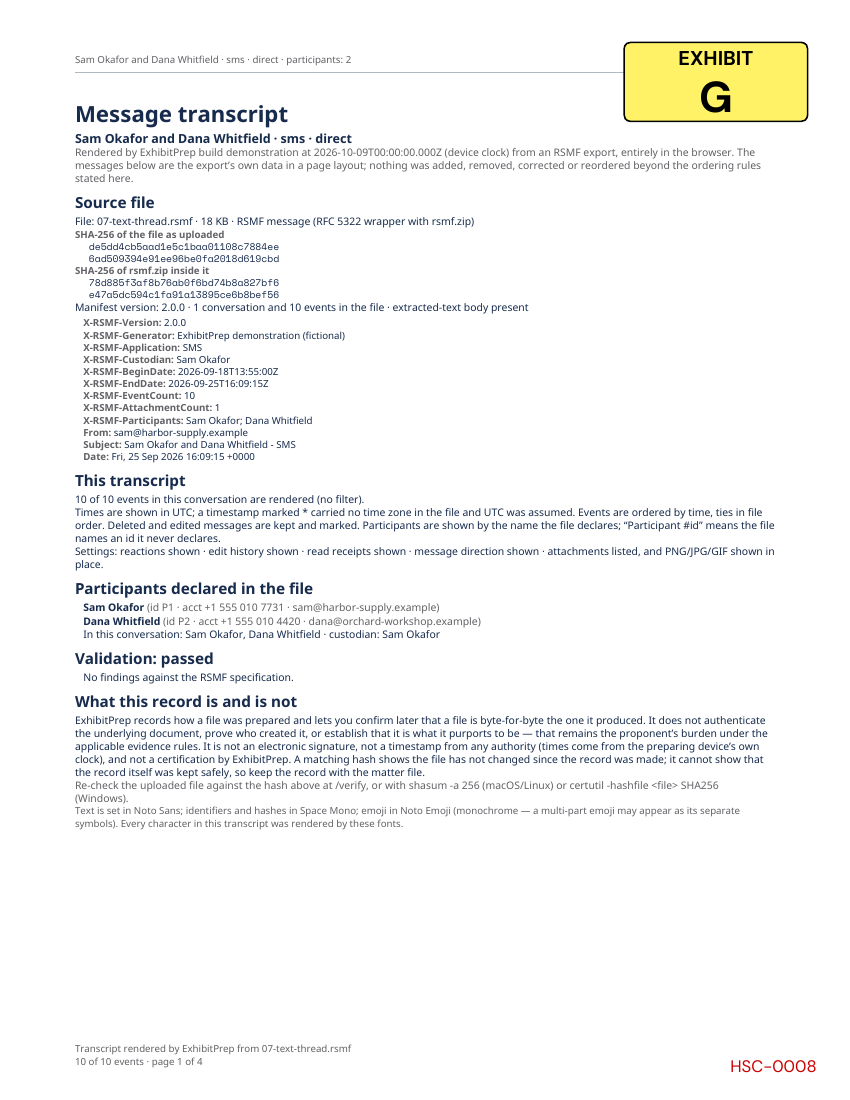
The documents
- ASupply Agreement dated March 3, 2026Two pages, with its own page numbers in the footer.
- BDelivery ledger (scanned)An image-only scan stored sideways.
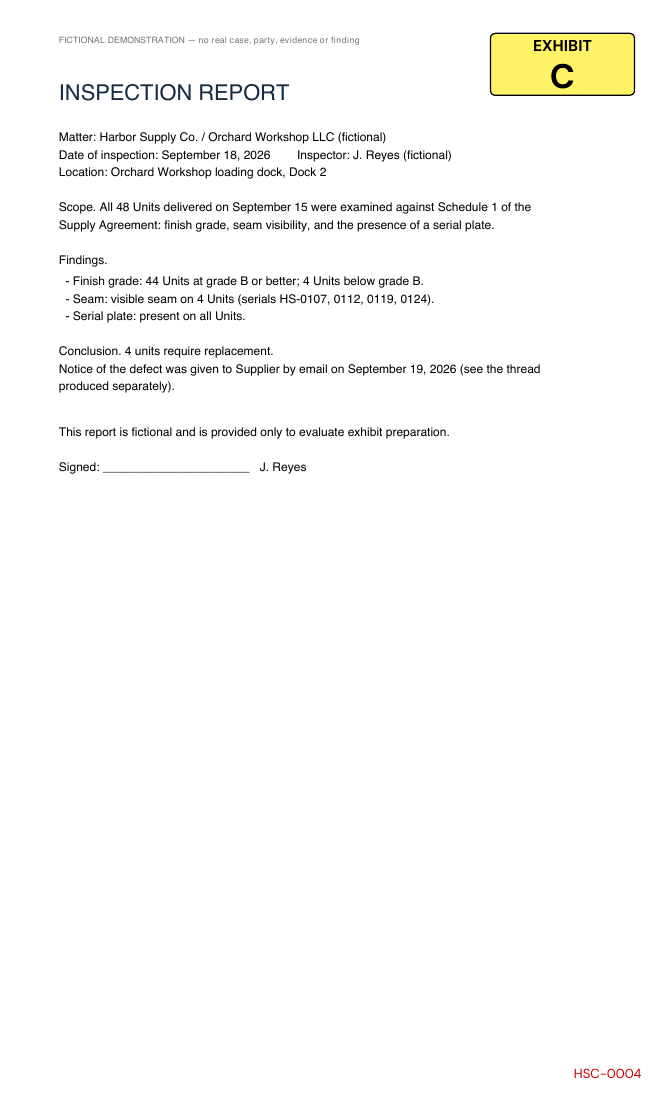
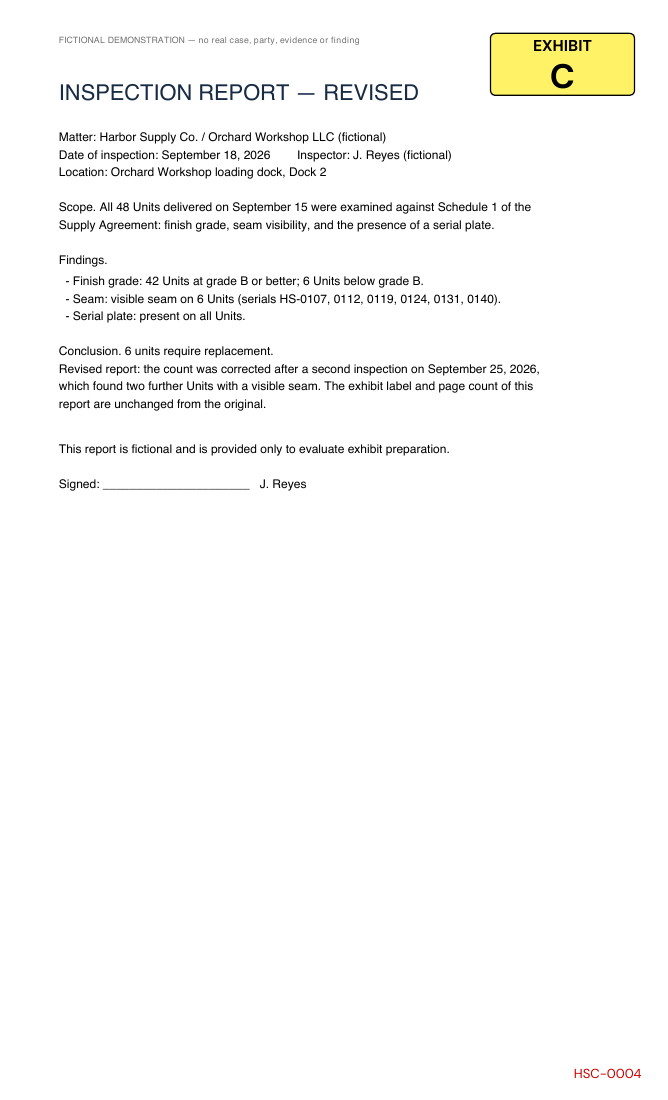
- CInspection Report of September 18, 2026Legal-size report. A revised version replaces it below.
- DEmail thread re: replacement unitsA printed email thread.
- EInvoice No. 10427A one-page invoice with a line-item table.
- FPhotograph of the loading dockA photo exhibit with no text layer.
- GText-message thread, September 18–25, 2026An RSMF message export — the chat format review platforms and collection tools write — rendered to a dated transcript with the export's hash on its first page.
Download the seven originals (ZIP) to run the matter yourself, or open it in the tool above with one click.
California: every page numbered
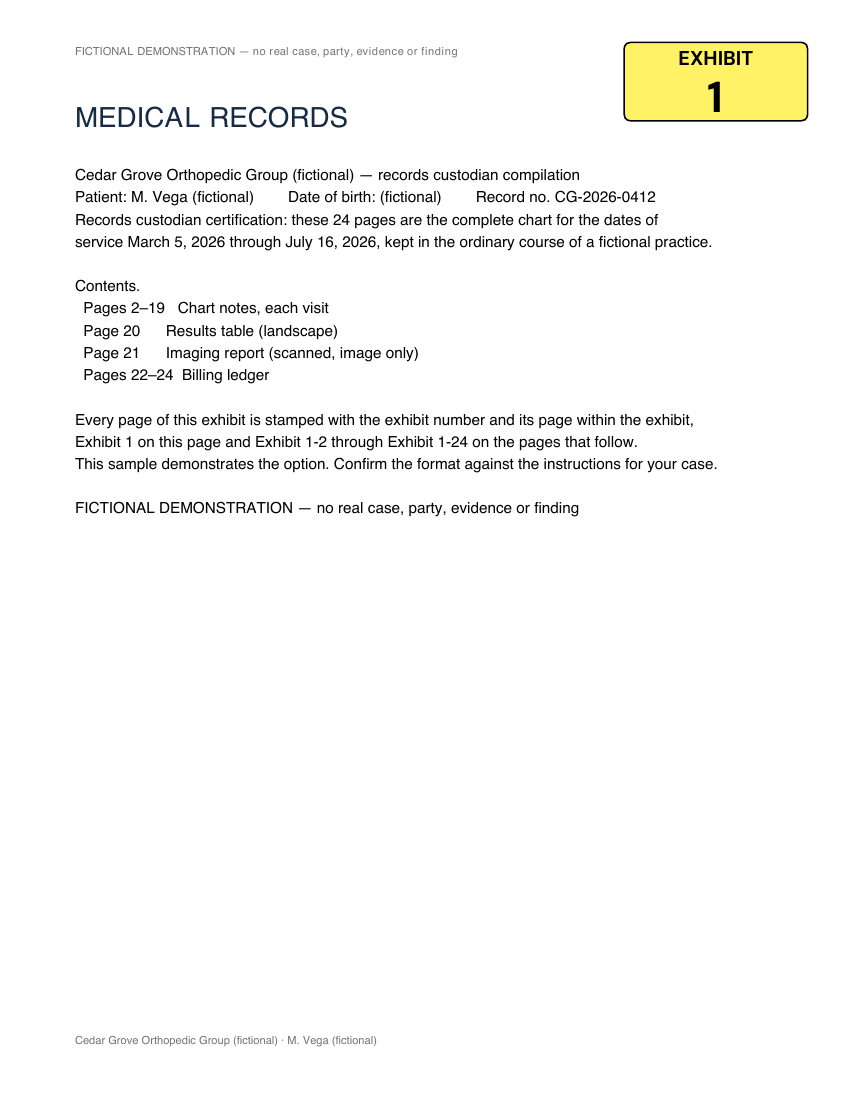
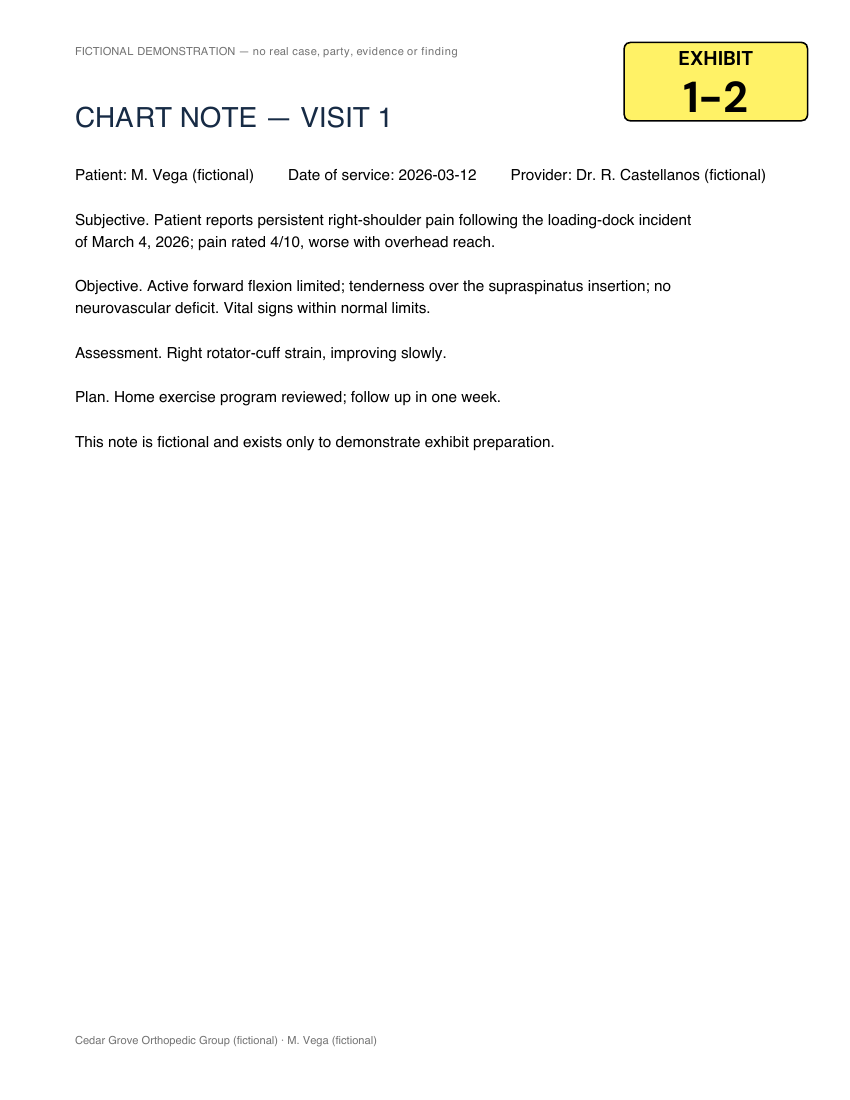
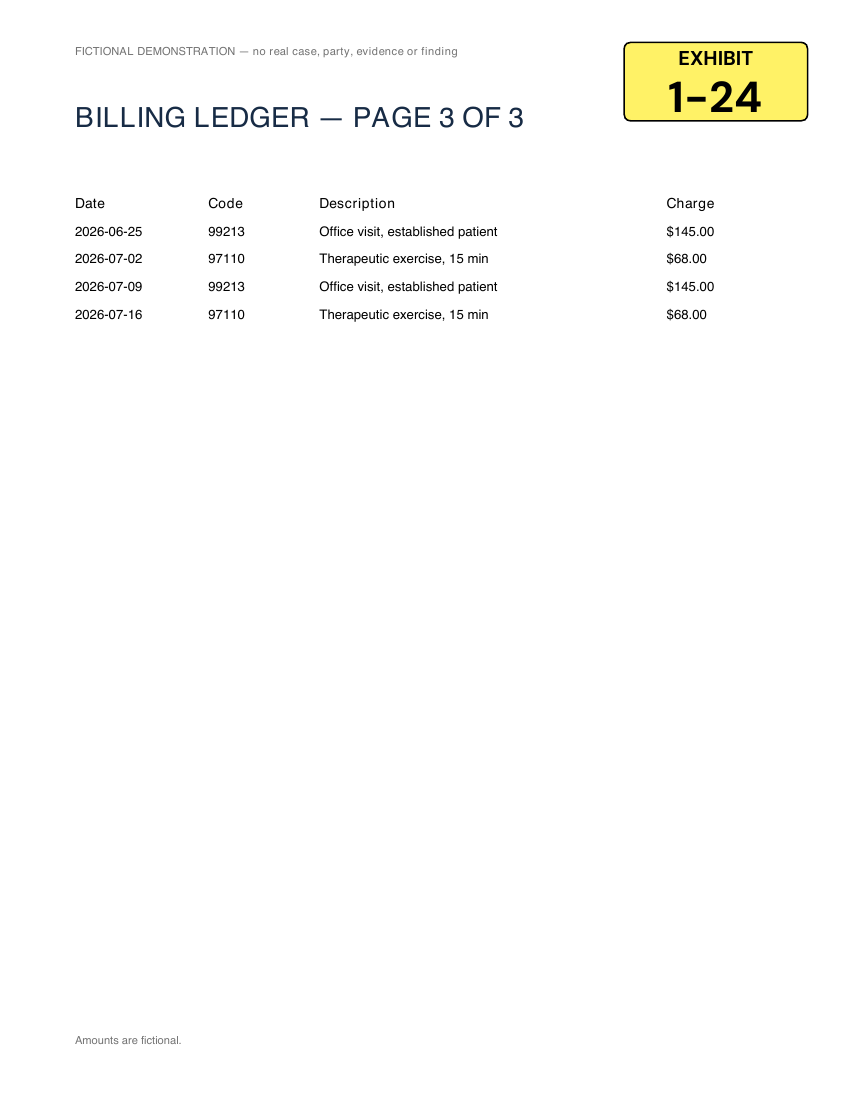
A second fictional matter, prepared for a Los Angeles Superior Court trial binder. Los Angeles Superior Court Local Rule 3.53 provides that documentary exhibits consisting of more than one page must be internally paginated in sequential numerical order. The exhibit stamp itself carries the page: Exhibit 1 on the first page of the 24-page medical records, then Exhibit 1-2, Exhibit 1-3 … Exhibit 1-24. The one-page photograph is Exhibit 2; the six-page lease reads 3, 3-2 … 3-6 beside its own footer. Four exhibits, 34 pages, one contents page.
Download the four originals (ZIP) · How exhibit page numbering works · Help: numbering every page of an exhibit
Review a correction
The inspection report in Exhibit C originally says 4 units require replacement. The revised report says 6. Its label and page count stay the same, so the packet looks identical from the outside: a stable label does not mean the underlying document is unchanged. The revised packet is prepared the same way.
Download the revised packet (PDF) · Download the replacement source (PDF)
Demonstration only. The organizations, records and findings are fictional. This packet is not a model filing or a statement of any court's requirements; the receiving court controls acceptance.